
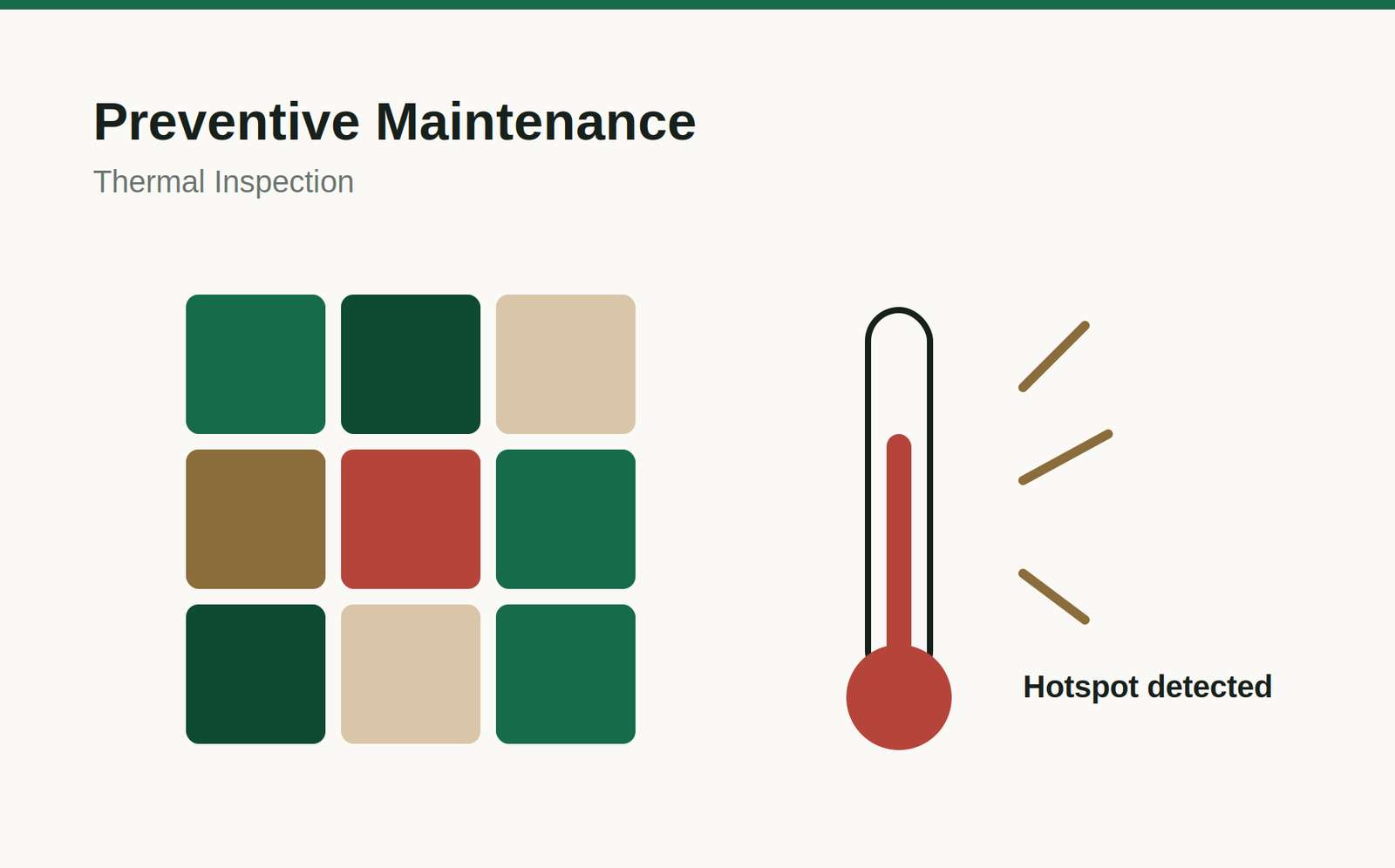
The value of battery storage O&M is rarely dramatic. A field note on thermal inspections, torque checks — and the failures that never happen.
This is a story about nothing happening. In battery storage operations, that is precisely the point.
An ordinary afternoon
Recently, our team ran a routine thermal inspection at a C&I BESS site in Benelux. SCADA was clean. No alarms. Performance within specification. By every remote measure, a perfectly healthy site.
Except one busbar connection reading 0.3°C above its neighbors on the thermal camera. Small enough that no monitoring system would flag it. Small enough to dismiss as noise.
A torque check told a different story: a connection loosened by thermal cycling. The failure path from there is well documented — loosening, rising contact resistance, localized heating, hotspot, and eventually a far more expensive conversation involving downtime, availability penalties and warranty disputes.
Thirty minutes of work. One deferred failure.
The discipline behind "boring"
BESS O&M rarely creates heroes. Its value lives in scheduled, disciplined, unglamorous work: thermal inspections, torque audits, firmware campaign management, connection checks. Done consistently, the heroic intervention never needs to happen. Skipped, every saved inspection is eventually bought back at a multiple.
For manufacturers shipping systems into Europe from thousands of kilometers away, this is the hardest layer to deliver: a certified, insured, properly equipped technician standing in front of your cabinet on a rainy Tuesday in Belgium, catching the 0.3°C a dashboard never will.
Remote diagnostics see data. They do not feel a loose connection. Monitoring platforms draw curves. They do not carry a torque wrench.
Three questions for any BESS service lead
When was the last on-site thermal inspection of your European fleet — and by whom, holding which certifications? What is your torque-audit interval, and can you produce the execution records? If a European customer demanded 48-hour on-site response tomorrow: is your answer a flight, or a phone call?
The third question is why we exist.
BessRe's engineers hold BA4/BA5 high-voltage, VCA safety and ITC Level-1 thermography certifications, providing field service across the Benelux from Antwerp, Belgium.